On February 23 of this year, a News & Observer photographer stood on Audubon Drive in North Raleigh and photographed a compact track loader and a backhoe working bare red clay at number 7817. The original house was already gone. In the same story, a new home on Ravenhurst Drive was already sold while still under construction, and a two-story house was going up between ranch-style neighbors on Duke Road in Quail Ridge.
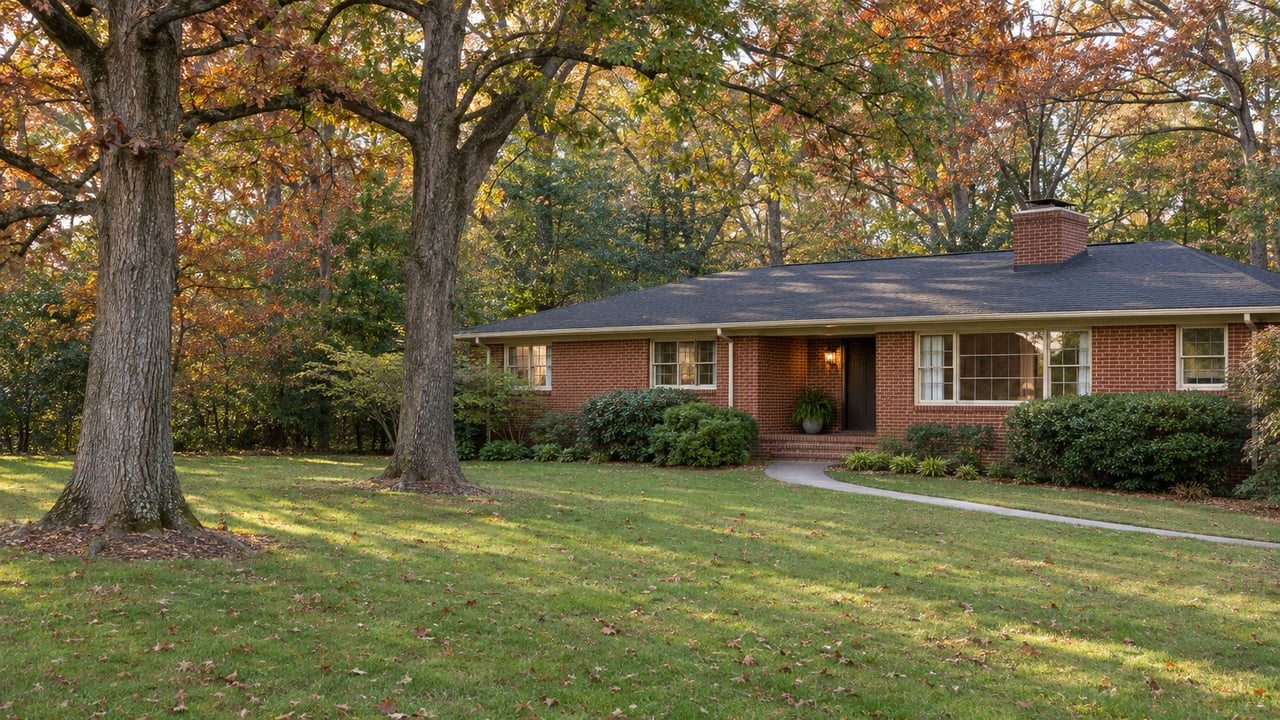
For someone relocating to the Triangle, those photos explain more about older Raleigh homes than any price chart. A modest 1960s or 1970s ranch on a good lot near North Hills or inside the Beltline has two kinds of buyers. One wants to live in it. The other wants to knock it down. Increasingly, the second buyer sets the price.
The comparable sale is the new house that could replace it
The News & Observer reported that Raleigh recorded 252 demolitions in calendar year 2025. That was more than double the 124 in 2024 and the 105 in 2023. Raleigh Planning Director Pat Young told the paper that not all of them were teardowns, but most were. The count covers the whole city, so it is not a tally for any one neighborhood. Still, it shows that rebuilding on an existing lot has become a regular way new homes get built in Raleigh.
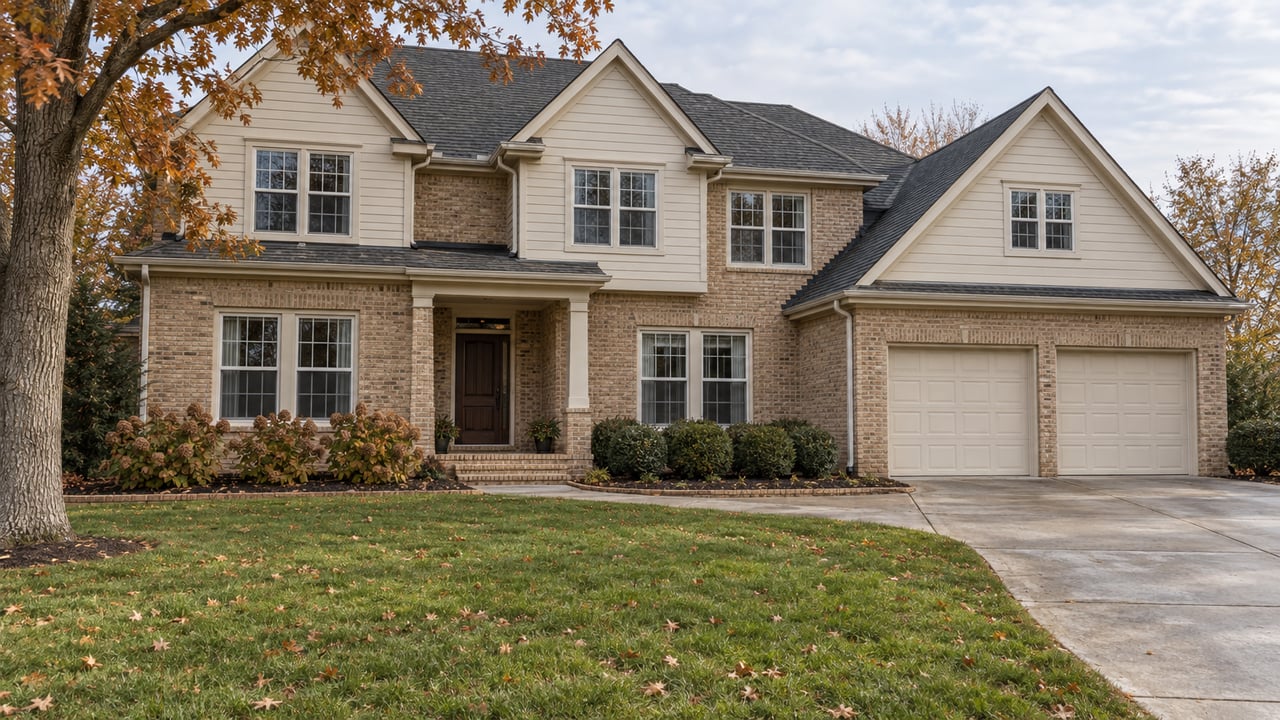
Young also gave the other side of the math. In the same article, he put the average price of a brand-new single-family home inside the Beltline at about $1 million to $1.1 million. One new home the paper photographed on Haymarket Lane, towering over the houses on either side, had been listed at $1.75 million and had already sold by the time the paper published in February.
A builder values a dated ranch by what a finished new home on that lot could sell for. When a builder can pay more for the lot than a family would pay for the house as it stands, the builder's offer sets the market price, and the house no longer sets its own value.
Architect Jennifer Truman called this "development math" in the News & Observer piece. She also said people tend to assume it is just profit-maximizing, when in practice "there are a lot of players involved in everything." Lenders, underwriters, material costs and nearby single-family prices all feed into it. For a relocating family, it means the asking price on an older home in these areas often reflects a calculation they never see.
Why the pressure falls on 1960s and 1970s houses
The age of the housing stock matters. Paul Kane, CEO of the Home Builders Association of Raleigh-Wake County, told the News & Observer that Raleigh grew quickly in the 1960s and 1970s after Research Triangle Park was built. Many homes from that period have reached the end of their lifecycle, he said, especially if they were never substantially renovated, and major repairs on them can get expensive.
That is the stock that surrounds North Hills. Tobacco Road Custom Builders describes much of the neighborhood's original housing as dating to the 1960s and 70s and "well into a generational rebuild cycle." The builder says full teardowns often make more financial sense than deep renovations, particularly when foundation work or systems upgrades are already needed. The same builder puts most North Hills residential lots between a quarter acre and a half acre, with larger pockets near Lassiter Mill Road.
Land is the other half of the pressure. Kane described Wake County as running low on good developable land. In his words, that leaves a buyer choosing whether to tear down a house "in a part of town you love" or move out of the county. Truman framed the same choice from the city's side: either Raleigh changes incrementally, one lot at a time, or growth spreads to Clayton, Johnston County and Garner. Every lot near North Hills is effectively priced against that alternative.
The competition rarely shows up at the open house
The buyer you are competing against in these neighborhoods is often a builder, or a family working with one, and those deals tend to move quietly. Raleigh Custom Homes, which specializes in Midtown infill, says on its own site that vacant land is "virtually non-existent" in North Hills. It says suitable older homes on generous lots "often sell before ever hitting the MLS," and that it actively acquires property in North Hills and Midtown to hold for clients. Speight Built markets teardown-and-rebuild services in Five Points, Hayes Barton and North Raleigh.
These are builders describing their own business, so they are not an independent count. They do describe how the deals happen. A family that waits for a well-located ranch to appear in a portal search is coming in after the builders have already looked. Builders know the lot dimensions, have a sense of the buildable area and can make a quick offer without asking whether the kitchen is livable. The family asks the opposite question.
In practice, the strongest buyers in this segment have walked the neighborhood before the right house comes up and already have a sense of what a builder could pay for the lot.
Renovate or rebuild has to be settled before the offer
Young summarized the buyer's options in three parts: buy the home as is, rehabilitate or modernize it, or tear it down and replace it. "It really is a matter of economics," he told the News & Observer.
For a relocating buyer, the order of those decisions matters. If the price already reflects lot value, the family is paying close to land price either way. The remaining question is whether the existing structure is worth keeping. A ranch with sound framing and a recently updated mechanical system can be a good value, because the buyer pays roughly what the lot is worth and gets a usable house with it. A ranch that needs foundation work and new systems is the house Tobacco Road describes as a teardown candidate. A family that buys it planning to renovate will face the same calculation the builder made, only after closing. It is much cheaper to make that calculation before closing, with an inspector and a contractor's estimate in hand during due diligence.
Where the countywide numbers fit
The headline figures you have seen elsewhere describe a different market. The Wake County Register of Deeds reported a countywide median sale price of $475,000 for October 2026, up from $450,000 in September. That figure is based on deed-recorded sales across the whole county. The new homes replacing ranches inside the Beltline average about double it, based on Young's estimate earlier this year. The older homes on those same streets are priced against the new ones, not against the county median.
A few questions relocating buyers ask
Is this only happening inside the Beltline? No. The N&O identified established, high-value neighborhoods inside the Beltline as common teardown locations, and its examples from this year include Audubon Drive in North Raleigh and Duke Road in Quail Ridge.
Does every new project replace one house with one house? Not always. Young said that since Raleigh's missing-middle zoning changes, the city has seen a large increase in side-by-side two-unit townhomes inside the Beltline selling for $550,000 to $700,000 per unit. He also said the city does not yet have enough data to know whether those changes are reducing teardowns. If you are weighing an attached home against a single-family house in the city, our comparison of luxury condos and single-family homes in Raleigh covers that trade-off.
What about owners of these homes? If you own a 1960s or 1970s house near North Hills, you have two kinds of potential buyers, families and builders, and your price should reflect whichever will pay more. Our Raleigh pricing guide and a private home valuation are good places to start.
If an older Raleigh ranch near North Hills or inside the Beltline is on your list, it helps to know what a builder would pay for it before you make an offer. Margaret Sophie can help you estimate the lot's value, and plan the renovate-or-rebuild decision for your due diligence period. Schedule a consultation, and visit our Raleigh neighborhood guide as you narrow your search.